

Being a drone photographer is fun until drone geofencing stops you from getting that perfect shot.
Imagine being on an island with beautiful scenery, but you can’t fly to certain areas and take pictures and videos for memories because the drone won’t take off!
Luckily, not all drones have geofencing, but which are the best drones without geofencing?
The winner, Autel Evo II, is famous for excellent camera quality, extended flight range and time, and potent sensors. Still, models like GDU 02, DEERC D20, Yuneec Typhoon Q500, and Holy Stone HS700E are worth it because of the low-cost, great design, and fantastic performance.
Geofencing is not always a good thing. Drones should access any area if you observe the provided laws.
Keep reading this guide on no-limit drones for an informed choice.
Advantages and Disadvantages of Flying without Geofencing
In simple terms, geofences are invisible fences placed around physical zones that keep drones from accessing these “fenced” areas. When breached, these fences will activate several actions. Geofencing is the application of geofences.
How does it work?
Geofencing signals constantly communicate with the drone’s software using location technologies. However, geofencing doesn’t only work with GPS systems but also with WIFI, RFID, Bluetooth, and mobile data because of their signals.
Some restricted zones may apply two geofences, with one acting as a warning when a drone breaches the restricted zone, giving the pilot a chance to turn back immediately.
The second bringing down the drone automatically without the pilot’s control whenever breached.

Advantages
- Freedom of flying works best, especially for pilots who want to explore and take incredible images and videos.
- Delayed response time: You can use your drone for search and rescue missions. Waiting for authorization to access restricted areas when there’s an emergency can take forever. But drones without flight restrictions can easily breach the perimeters and save lives.
- Access to random areas: Sometimes, consumers feel geofencing drones violates their rights. They argue that a drone flying below 10ft high is not a risk to anything. So, without geofencing, they can fly drones in their backyards or even the park adhering to necessary laws.
Disadvantages
- Risk of collisions: When drones access FAA-restricted areas like airports, collisions, and crashes will likely occur with aircraft.
- Risk of damages: Once the military spots an unauthorized drone in their airspace, they will likely shoot it down. That’s how you could lose your thousand-dollar drone!
- Legal issues: Flying your drone in restricted zones without geofencing could attract legal issues. For example, flying a drone filming other people is a breach of privacy and risks a lawsuit against the pilot.
- Risk of hacking: Without individual geofences, hackers can easily hack and fly away your drone.
Types of Geofencing Zone
There are many different levels of geofencing zones, with some only giving a warning like mentioned above, and others fully disabling your drone.

Such zones include:
- Restricted zone: This is an entirely red zone. The red color shows on your drone’s screen, warning you to turn back immediately or risk a shootdown or severe damage. However, this zone halts the drone immediately outside the perimeters.
- Altitude zone: This is a grey zone where you can only fly up to a certain altitude. The grey color starts indicating when your drone is at a restricted altitude. It works mainly in airports and is subject to frequent changes.
- Authorization zone: Also called the blue zone, you can only pass this zone with a permit. It’s also a restricted zone that shows blue on the screen if you fly there.
- Warning zone: This zone shows yellow on your drone’s screen map. Here, the pilot gets a warning that they are entering a restricted zone. Thus, the pilot must confirm they have the authorization to proceed or turn back to prevent dangers.
- Enhanced warning zone: It’s indicated orange and asks the pilot to unlock the zone or be responsible for whatever outcome of the proceeding. The unlocking process differs from getting authorization because you don’t need a verified account or internet connection.
- Regulatory restricted zone: Usually, this zone has no specific color. But, it shows restrictions on access to local areas by local authorities. These law authorities limit flying drones in areas like schools and prisons.
- Recommended flight zone: The green zone on the map allows you to fly freely within the zone. So when choosing zones, the green zones are available for flight arrangements.
Luckily, with your drone’s geofencing software, you’ll receive different indicators when you get near or through these zones so you know where they are located.
5 Best Drones without Geofencing
1. DEERC D20
Since kids are natural explorers, a drone would be a great way to help them have fun outdoors.
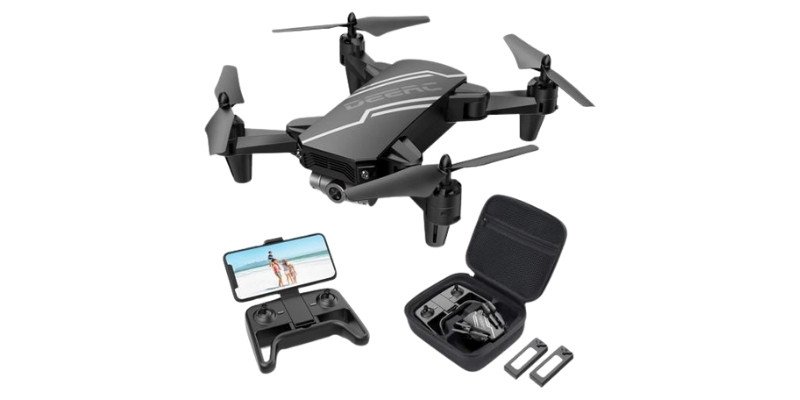
The DEERC D20 is a great fit since it’s among the best drones without GPS and a perfect way for them to have fun without any restrictions. Of course, you will need to supervise them to make sure they don’t fly in restricted areas.
It’s an indestructible little drone that’s not just for kids and works best with all beginners and hobbyists who want to view the world from the skies.
The D20 features a 720P HD Wi-Fi camera and FPV transmission. These allow you to take high-quality footage and share it effortlessly as a live video feed using your device app.
Using D20 is excitingly simple – just tap the start key, and fly!
Plus, the altitude hold feature helps you keep your drone at the desired height for steady control. This makes it perfect for kids who may find it difficult to deal with more complex drones.
Other safety features that will help you stay at ease as your kid flies are the emergency stop, low power alarm, and propeller guards that prevent injuries and the drone from flying out of control.
Better still, it uses 2 rechargeable, powerful batteries that enable your child to enjoy up to 20 minutes of flight time and lets you sketch your flight course on your mobile device before take off.
Overall, it’s a simple affordable option for a no-limit drone, however, professional drone photographers will likely benefit from the more heavy-duty options below.
Easy to operate
Advanced features like voice command
Safe and powerful to fly
High-quality camera and transmission
Easy to do flips and maneuvers
Short battery life