

Flying a drone is a bit like riding a bike: Once you have mastered the basic controls, you need to focus on avoiding obstacles.
Some are quite obvious: a collision with a tree branch or overhead wire will certainly bring your flight to an end. But others are harder to spot… a loose stone hidden in grass or a cloud of dust ready to get kicked up by prop wash.
Trust me, I learned the hard way that a surprisingly small stone can cause hundreds of dollars of damage to your drone.
So, if you’re still wondering whether you need a drone landing pad, my answer is a definite ‘yes’. For me, it isn’t just another accessory – it’s essential protection and a very worthwhile investment.

The Hard Truth: What Happens When You Skip the Landing Pad
Let’s talk about what’s really at stake when you decide to wing it without a landing pad. I’ve seen as many drone casualties from poor landing choices as from actual flight mishaps, and the damage is often completely preventable.
Propeller and gimbal damage tops the list of landing-related disasters. Your drone’s camera hangs in a delicate gimbal system that keeps footage stable. When you land on uneven ground, that camera becomes a pendulum swinging into rocks, sticks, or anything lurking in grass. Even small impacts can knock the gimbal out of calibration, turning smooth footage into nauseating wobble.
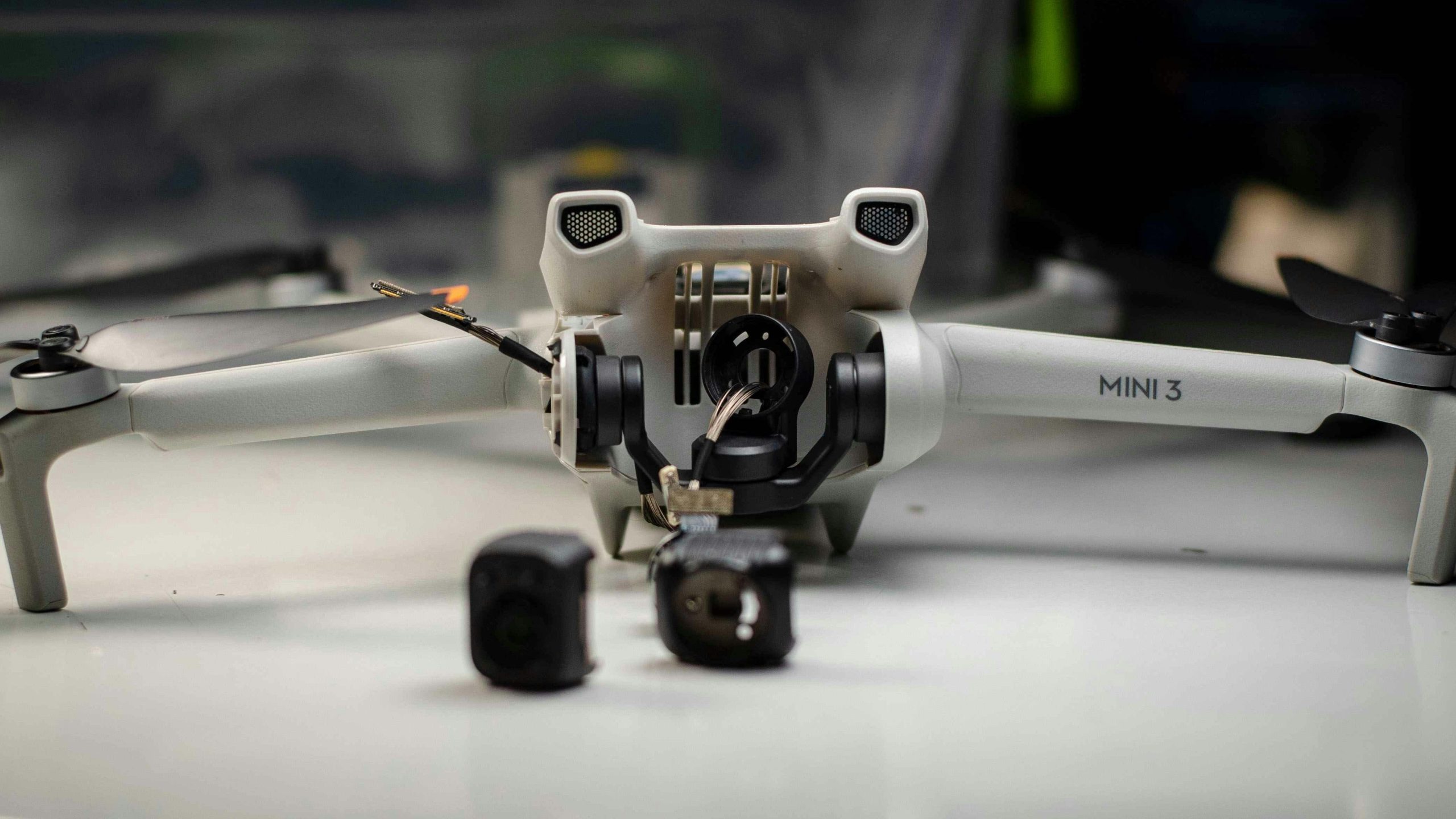
Similarly, anything that’s sucked up in your prop wash flies straight into those flimsy propellers – and believe me, it doesn’t take much to damage them.
My first Mavic Air 2 developed a persistent horizon tilt after what seemed like a gentle park landing. The repair? $180 at a DJI service center, plus two weeks without my drone.
Debris infiltration is the silent killer many pilots don’t consider. Every landing creates a mini dust storm that sucks particles directly into motors and internal components. Sand, grass clippings, and dirt particles cause motor wear, overheating, and eventual failure.
Tip-overs and crashes happen more often than pilots admit, especially on uneven surfaces. Tall grass catches propeller tips during landing, causing cartwheels. Soft ground makes one landing leg sink deeper, tilting the drone until it topples.
The financial reality hits hard. A new camera and gimbal assembly for a DJI Air 2S runs $200-300. Individual propellers cost $15-20 each. Motor replacements hit $100+ per unit. Compare that to a quality landing pad at $50, and the math becomes crystal clear.
Beyond money, there’s lost opportunity cost. Every minute dealing with damage is a minute not flying. Every repair means missing perfect weather, golden hour lighting, or special events. A landing pad isn’t just protection; it’s peace of mind that lets you focus on creating instead of worrying.
Who Actually Needs a Drone Landing Pad?
After years of flying and watching others learn the hard way, I’ve seen who benefits most from using a landing pad.
Beginners and kids are at the top. Mastering basic controls takes time, and landing smoothly is tough in the beginning. I’ve seen new pilots bounce drones off the ground more than once. A landing pad gives them a clear, safe target and helps build confidence from day one. Kids especially benefit from the visual guidance. A bright, defined pad improves distance judgment. Plus, children are not always gentle with gear. A pad adds that extra layer of protection.
Business users and content creators also benefit. If you fly for real estate, construction, or marketing, your gear needs to work every time. A scratched camera or crooked gimbal can ruin an entire shoot and hurt your reputation. In addition, there’s also a branding benefit. Landing on a pad with your logo during client work shows professionalism and attention to detail.
Flying in rough terrain? A landing pad is a smart investment. Dust, sand, and uneven ground can damage motors and electronics. I once flew at a construction site. Fine concrete dust got into my drone’s motors. The repair cost more than three quality landing pads.
Bottom line: if you fly often, care about your drone, or use it professionally, a landing pad is not just a nice accessory. It is essential.
How to Choose a Drone Landing Pad
So you’ve decided that a landing pad isn’t such a bad idea… but which one do you pick?
My guide to the 4 best drone landing pads covers my top choices in detail, but here’s a quick overview based on 3 key criteria: budget, durability, and personalization.
Personalization
This may not be something you’d considered, but the majority of drone landing pads are some variation of a helipad design. Kinda makes sense, since you’re landing an aerial vehicle on them, but also kinda boring and unoriginal.
If you’re after something a bit different, I recommend a custom drone landing pad from Premium Drone Supplies, which combines serious protection with the ability to create something uniquely yours.

Upload any image you like – it could be your company logo, your kid’s favorite superhero, or even a photo of your dog (guilty as charged) – and you’ll receive a high-quality, 22” (55cm) vinyl landing pad printed with your picture.
After buying one for myself and testing it out, I’ve bought several more as gifts for drone pilots I know – the ultimate thoughtful and practical gift I know they’ll use!
The 13oz vinyl is weighty enough to withstand prop wash from a small drone without staking, but I’d recommend always using the stakes provided just in case. The last thing you want is for your landing pad to fly away just as you’re trying to land.
Budget
A custom landing pad will set you back about $50 (which is still cheaper than most drone repairs), but if you’re on a tight budget, you can get a generic foldable nylon drone landing pad from Amazon for $15-20.

This type of landing pad does the job perfectly well in calm conditions, but may struggle with anything more than a gentle breeze. However, the lightweight foldable design can be the best choice if you’re hiking or traveling with it.
Durability
Consider how often you will use your pad, and the type of terrain it’s likely to face. Nylon can rip easily on rocky ground; it’s also not very forgiving on uneven terrain.
Thicker vinyl or a reinforced nylon landing pad like this STARTRC one will stand up to rougher conditions, so can be worth the extra investment up-front.
In reality, I’ve ended up with 3 landing pads that I use regularly, depending on the terrain and conditions I’m shooting in.
Final Verdict
After six months of regular use, the Premium Drone Supplies Custom Design Landing Pad has earned a permanent spot in my gear bag. This isn’t just about having Milo’s face looking up at me when I’m out on a shoot – it’s about equipment that consistently performs when needed.
When weight and space are at a premium, I opt for a foldable nylon pad. And when facing extreme conditions, I turn to a heavy-duty piece of kit.
One thing’s for sure – you won’t catch me flying a drone without a landing pad in play. I learned the expensive way that it’s just not worth taking the risk, even as a seasoned drone pilot!
FAQs
What is a drone landing pad?
A drone landing pad is a designated surface that provides a clean, visible, and stable area for drones to take off and land safely.
Do I really need a drone landing pad?
Yes, if you fly in rough, sandy, dusty, wet, or grassy areas. A pad protects your drone from debris and improves landing accuracy.
What are the benefits of using a landing pad for drones?
A landing pad protects the drone’s camera and sensors from dust, dirt, and debris, ensures smoother landings, and improves visibility for return-to-home features.
Can a drone take off without a landing pad?
A drone certainly can take off without a landing pad, but it increases the risk of damage from uneven surfaces, tall grass, or loose gravel.
What size landing pad should I get for my drone?
Choose a pad that’s at least twice the size of your drone’s diagonal wheelbase for safe takeoffs and landings.
Is a landing pad required by law or drone regulations?
No, it’s not legally required for you to fly a drone with a landing pad, but I recommend it for safer and cleaner flight operations.
